Trade show marketing works best when every touchpoint has a clear purpose. A booth display can attract visitors, but the right giveaway can keep the conversation going after people leave the stand.
HKTDC showed this well during its promotional campaigns at the Hong Kong Electronics Fair and Hong Kong Trade Show. The campaign used practical branded giveaways, QR code engagement, product magazines, and small stationery items to connect with visitors in a simple but effective way.
For brands planning exhibitions, roadshows, trade fairs, or B2B activations, this is a useful reminder: promotional products do not need to be complicated to work. They need to be relevant, easy to use, and aligned with a broader campaign goal.
What HKTDC Did at the Trade Show
At the Autumn Edition of the Hong Kong Electronics Fair, HKTDC promoted its free sourcing service for customized supplier lists through an eye-catching booth display.
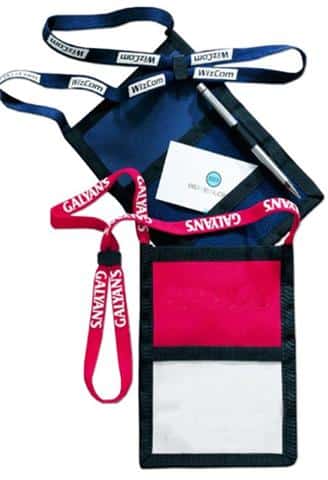
Visitors were invited to take a free badge holder. This made sense in the trade show environment because every attendee already needed to wear and carry a badge.
But the badge holder was not just a free item. Inside each holder was an advertising card promoting HKTDC’s Small Order service, a platform designed to support flexible sourcing with lower minimum order quantities.
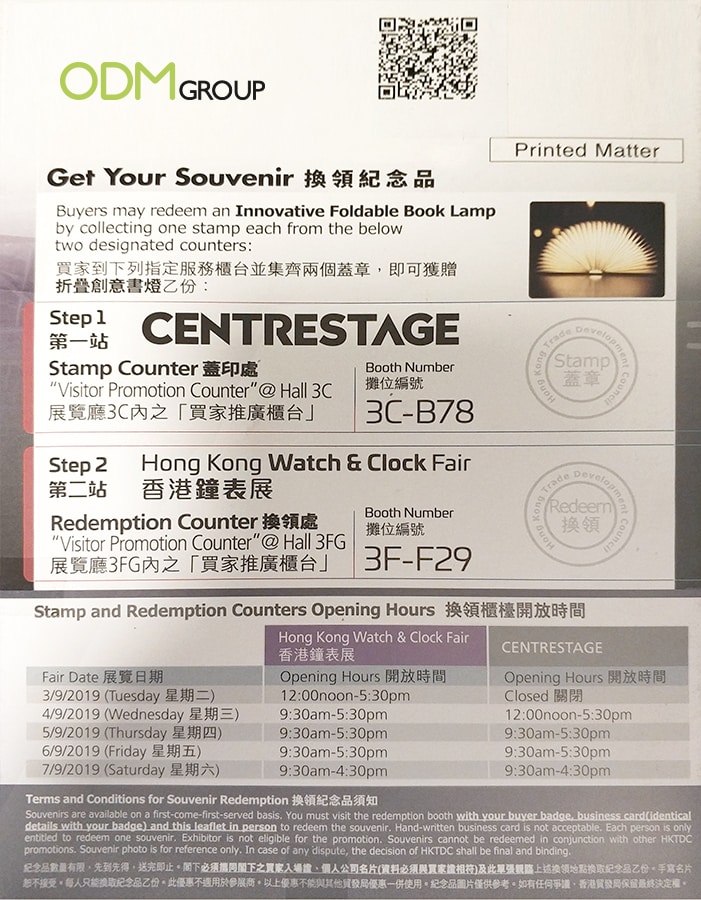
The campaign also included a QR code mechanic. Visitors who scanned the code could receive guaranteed prizes such as:
- a travel pillow
- a sleeping mask
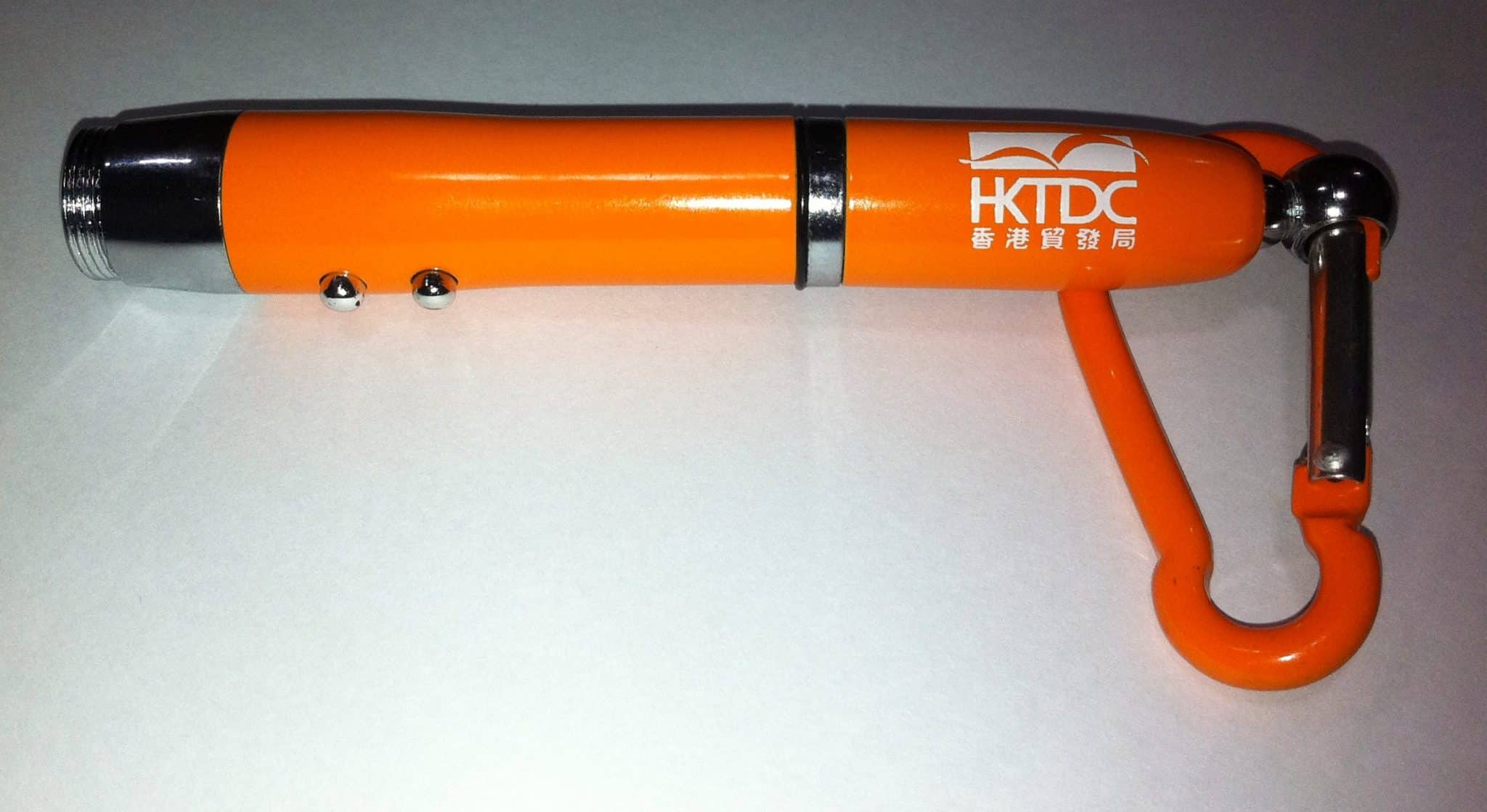
At the Hong Kong Trade Show, HKTDC also offered product magazines together with branded souvenirs such as pens and mini staplers in orange and white corporate colors.
These were simple items, but they matched the business setting well.
Why the Badge Holder Worked
A badge holder may seem basic, but in a trade show setting, it has strong practical value. Visitors use it during the event, carry it around the venue, and keep it visible while speaking with exhibitors.
That makes it a smart promotional tool.
It worked because it had three clear functions:
- It helped visitors carry their badges.
- It displayed HKTDC’s campaign message.
- It directed people to the next action through the QR code.
This is where the campaign becomes more interesting. The product was not separate from the marketing message. It became the carrier for the message.
The QR Code Turned the Giveaway Into an Action Point
The QR code gave visitors a reason to engage beyond simply accepting a free item.
Instead of handing out a badge holder and hoping people remembered the service later, HKTDC encouraged visitors to scan, interact, and claim a prize.
This matters because attention is limited at trade shows. Visitors move quickly from one booth to another. A QR code, prize draw, instant reward, or digital landing page can help extend the interaction after the first conversation.
A giveaway becomes more valuable when it connects to a measurable action, such as:
- scanning a QR code
- registering interest
- booking a product demo
- downloading a catalogue
- joining a mailing list
- claiming a sample
- entering a prize draw
The product brings people in. The mechanic gives them a reason to continue.
Why Simple Stationery Giveaways Still Work
Pens and mini staplers are not new ideas, but they can still work when they fit the environment.
At a B2B trade show, visitors collect brochures, take notes, compare suppliers, and attend meetings. Stationery products naturally support those behaviors.
The key is not to choose stationery because it is easy or cheap. The key is to ensure the item has a role in the event experience.

A pen used during a meeting can be more valuable than a novelty item that gets left behind. A small stapler can help visitors organize business cards, forms, or printed materials. Product magazines can support deeper discovery after the booth conversation ends.
The best trade show giveaways often feel simple at first glance, but they are useful at the exact moment the visitor receives them.
What Brands Can Learn From This Campaign
The HKTDC campaign shows that trade show marketing does not depend only on large booth builds or expensive gifts. The stronger opportunity lies in connecting booth design, promotional products, digital engagement, and follow-up.
A good giveaway should answer three questions:
- What does the visitor need in this environment?
- What do we want them to remember?
- What action should they take next?

When these three points align, the giveaway becomes part of the campaign strategy rather than just a free item on the table.
For example:
- A badge holder supports access and visibility.
- A QR code supports interaction.
- A prize gives the visitor a reason to scan.
- A product magazine gives them more information to review later.
- Stationery keeps the brand present during meetings and note-taking.
Each item has a small job. Together, they create a more complete trade show experience.
How to Build a Smarter Trade Show Giveaway Strategy
Before choosing a product, brands should look at the visitor journey.
A trade show visitor may pass the booth, stop for a few seconds, ask a question, collect a brochure, scan a QR code, speak with a sales representative, and move on to the next exhibitor.

The giveaway should support one or more parts of that journey.
1. To attract attention
Use visually strong booth displays, bold product samples, interactive counters, or instant reward mechanics.
2. To start conversations
Use practical items that invite explanation, such as sample kits, demo tools, branded pouches, badge holders, notebooks, or product-themed gifts.
3. To collect leads
Connect the giveaway to QR codes, landing pages, digital catalogs, registration forms, or prize redemption.
4. To improve post-show recall
Choose items visitors are likely to keep using after the event. This could include desk accessories, travel items, tech accessories, drinkware, reusable bags, or industry-specific tools.
The strongest trade show giveaway strategy is not always about choosing the most unusual product. It is about choosing the item that makes the campaign easier to notice, understand, and remember.
Trade Show Giveaway Ideas That Can Support Campaign Goals
Here are practical giveaway ideas brands can adapt depending on the audience, budget, and event type:
1. Badge holders with printed inserts. Useful for registration areas, conferences, sourcing events, and B2B exhibitions.
2. QR code cards, NFC tags, or smart badges. Helpful for linking visitors to catalogs, product videos, landing pages, or prize claims.
3. Travel pillows and eye masks. Strong fit for international trade shows where many visitors are traveling.
4. Branded notebooks, pens, and mini staplers. Useful during meetings, buyer conversations, and post-show office use.
5. Reusable tote bags or document bags. Helpful for carrying brochures, catalogs, and samples around the venue.
6. Sample kits. Ideal for introducing materials, finishes, new product ranges, or technical capabilities.
7. Custom pouches or organizer cases. Useful for holding business cards, brochures, product sheets, or small samples.
8. Interactive prize gifts. Good for encouraging QR scans, survey participation, or booth registration.
How ODM Helps Brands Create Trade Show Giveaways That Perform
At ODM Group, we help brands develop trade show merchandise that supports the full campaign, not just the giveaway table.
Our team can assist with sketch design, prototyping, factory selection, quality control, and logistics. This is especially useful for brands preparing for exhibitions, roadshows, product launches, retail activations, and B2B events across different markets.
The goal is to make sure the promotional item fits the audience, the event environment, and the campaign objective. A well-planned giveaway should attract attention, create interaction, and give visitors a useful reason to remember the brand after the show.
Final Thoughts
HKTDC’s campaign is a good example of how practical giveaways can support stronger trade show marketing. The badge holder worked because it was useful during the event. The advertising card carried the message. The QR code created an interaction. The prizes encouraged action. The stationery and magazines supported post-show recall.
For brands, the lesson is not to copy the same products exactly. The better approach is to copy the thinking behind them.
Start with the visitor journey. Choose products that fit the event. Add a clear call to action. Make the giveaway useful enough to keep. Then connect the whole campaign through branding, content, and follow-up.
Planning a trade show, exhibition, or roadshow campaign? Contact ODM Group to develop custom-branded giveaways that attract visitors, support lead capture, and keep your brand visible after the event.
ODM Services
Frequently Asked Questions
Can a trade show giveaway help qualify leads instead of just attracting booth traffic?
Yes. A giveaway can be connected to a simple qualifying action, such as scanning a QR code, selecting an industry category, answering one quick question, or choosing the product range they are most interested in. This helps the sales team understand who is genuinely interested, not just who wanted a free item.
What makes a trade show giveaway feel more premium without increasing the budget too much?
Presentation often makes the biggest difference. A simple item can feel more valuable with thoughtful packaging, a clean insert card, strong color matching, better logo placement, or a useful campaign message.
How can brands stop giveaways from being thrown away after the trade show?
Choose items that solve a small real problem for the visitor. Travel accessories, desk tools, organizer pouches, notebooks, reusable bags, and sample kits tend to stay useful after the event. Branding should also feel clean and well-placed, so the item feels easy to reuse.
Are low-cost giveaways still worth using at major trade shows?
Yes, when they are planned properly. A low-cost item can be effective if it supports the visitor journey, carries a clear message, and encourages a follow-up action. The issue is not low cost. The issue is giving away items with no connection to the campaign.
What to Read Next?
Event Production Show 2026: Industry Insights for Brands
Live events have evolved far beyond booths, banners, and [...]
Highlights From LifeStyle Trade Fair in Vietnam 2025
ODM Group attended LifeStyle Vietnam 2025 in Ho Chi [...]

How to Run Effective Trade Show Marketing that Get More Leads?
Trade shows are great venues to showcase a business's [...]

Trade Show Display Design: Discovering Success in the Crowd!
Trade show display design is akin to being a [...]
Must-Have Sustainable Merchandise Ideas for Your Next Event!
Tradeshow events offer a prime platform to spotlight your [...]
Global Sourcing Fair: A Promising One-Stop Shop for Businesses
Trade fairs are anticipated events that open up a [...]